
Thrust 2: Transport Energy Infrastructure
Research highlights from the CLEETS Thrust 2 team.
About this research thrust
This research thrust addresses the interconnections between transportation, energy systems, material supply chains, and climate resilience to enable a net-zero, place-based transport decarbonization strategy. It emphasizes a systems-level integration of transport with electricity, water, petrochemical, and mineral resource systems, avoiding emissions shifts and ensuring efficient resource use. The project highlights the growing reliance on critical raw materials in electric and hydrogen vehicle technologies and promotes a circular economy to manage end-of-life components and maintain material supply. Resilience to climate risks and extreme events is a central concern, prompting the development of place-based digital twin models, emission pathway forecasting, and adaptive strategies like vehicle-to-grid integration. The research will leverage tools such as the Powertrain Technology Transition Market Agent Model (PTTMAM), machine learning, and digital twins to simulate future energy-transportation scenarios and inform policy, infrastructure siting, and investment decisions. Three primary tasks will support this effort:
- Focus on transport decarbonization linked to electrical systems, exploring emissions trade-offs, resilience to grid blackouts, and charging demand forecasting through machine learning.
- Targets hydrogen-based transport solutions, developing a roadmap and hierarchical control systems for hydrogen production, storage, and use.
- Aim to establish a regional circular economy, analyzing material demand and the spatial distribution of recycling facilities to manage EV and hydrogen vehicle waste sustainably.
Across all tasks, stakeholder engagement and scenario testing across the Great Lakes, South Wales, and West Midlands regions will ensure transferability and scalability of solutions. The expected outcomes include actionable pathways for net-zero transport infrastructure, regional carbon budgeting, and integrated resilience strategies for future transportation systems.
Research Highlights from Thrust 2
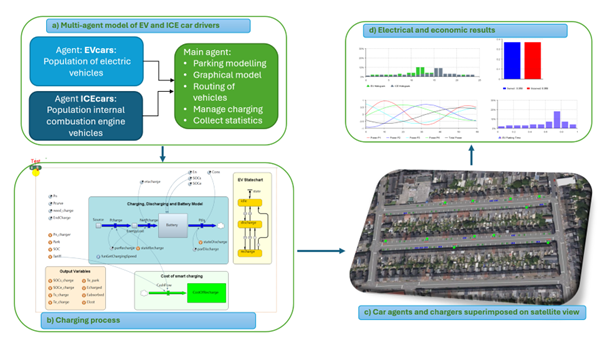
Impact of Future Electric Vehicle Infrastructure on Local Communities
Thrust 2
A multi-agent model that statistically generates car-owner behaviour for EV, hybrid and ICE vehicles to simulate parking and street-charging demand in local communities.
Sep 8, 2025 · Read more →
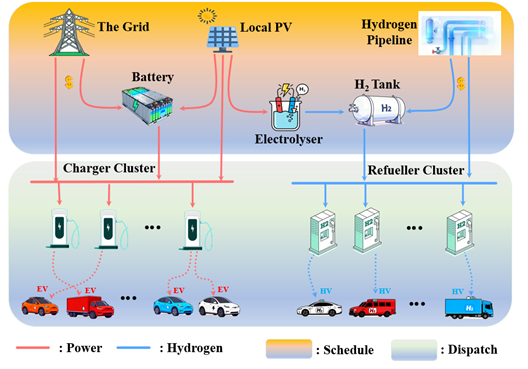
Intelligent Operation of Integrated Electricity–Hydrogen–Transportation Energy Systems
Thrust 2
Learning-based coordination of energy dispatch and vehicle scheduling in coupled electricity–hydrogen–transport systems under uncertain supply and dynamic demand.
Mar 1, 2026 · Read more →
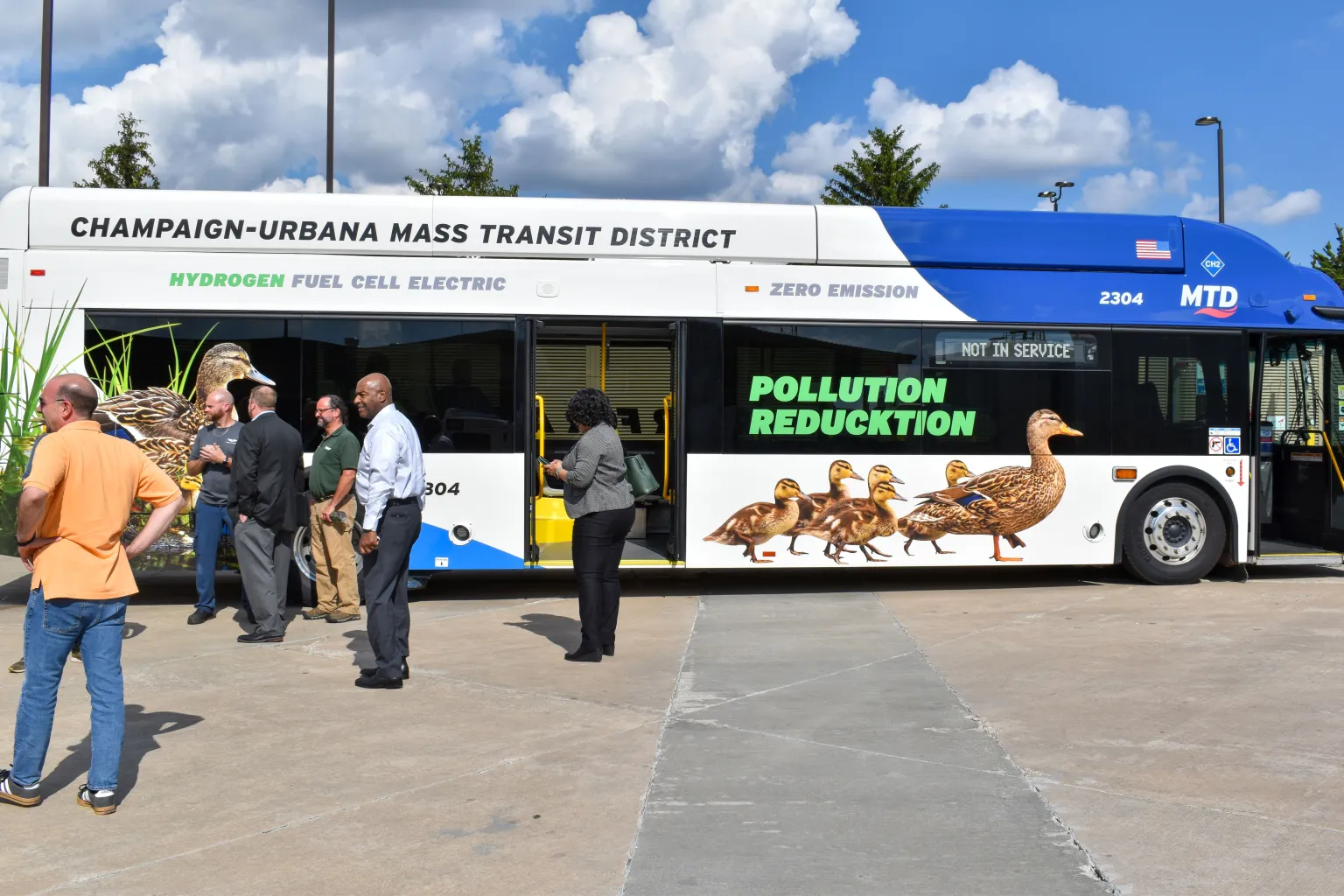
Hydrogen Fuel Trucking for Illinois
Thrust 2
A roadmap for hydrogen-fuelled heavy-duty trucking in Illinois using a discrete-event simulation of corridors, refuelling stations, logistics hubs and the electricity grid.
Sep 3, 2025 · Read more →
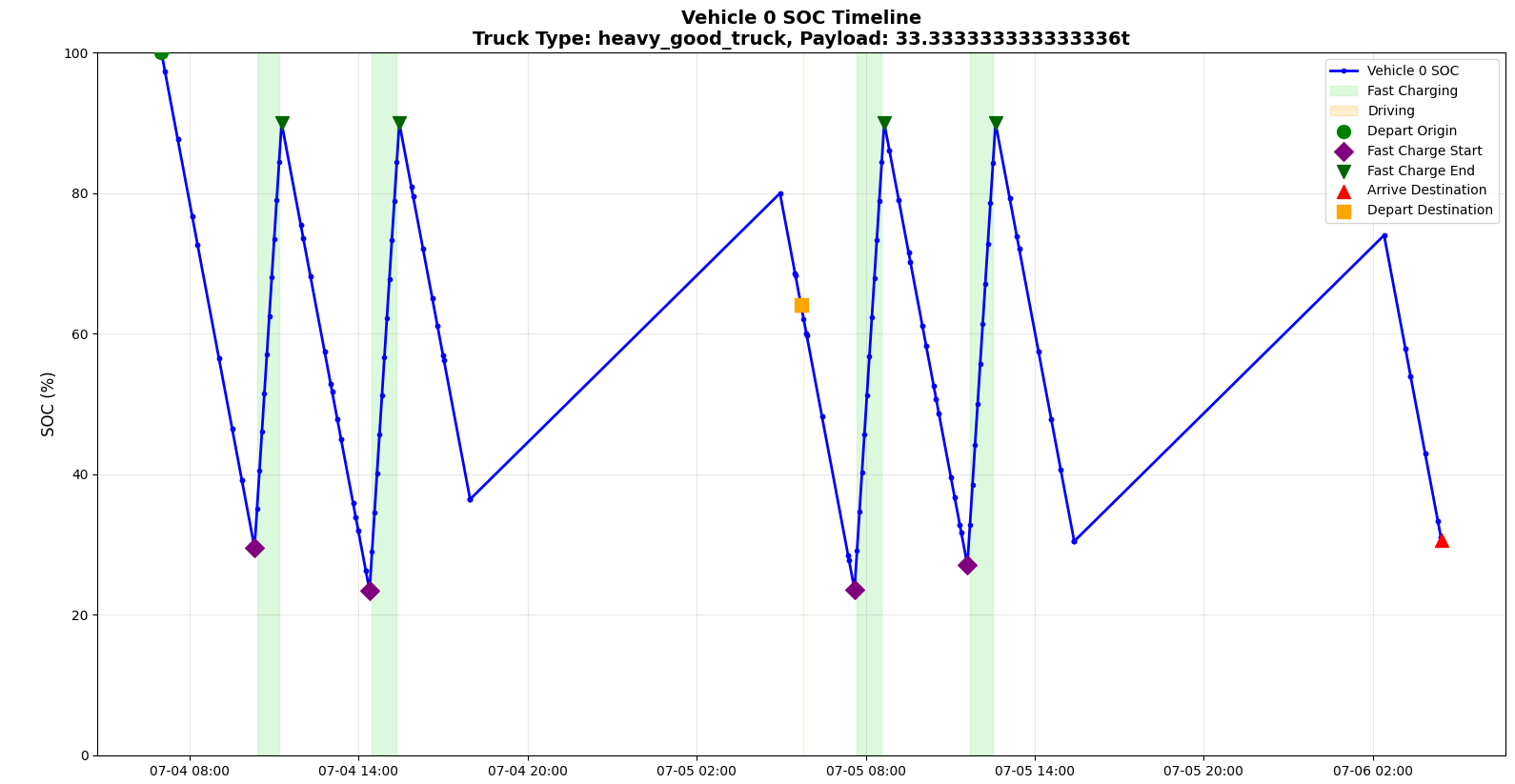
Intelligent Route and Charging Optimization for Heavy-Duty Electric Trucks on the UK Road Network
Thrust 2
An intelligent path-planning system for heavy-duty electric trucks, built on a national-scale roadmap and charging-station optimization model with multi-objective, AI-driven fleet coordination.
Sep 9, 2025 · Read more →
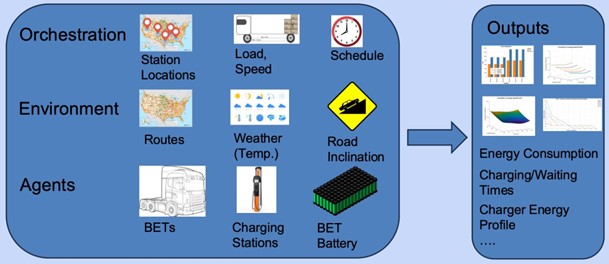
A Simulation Framework for Battery Electric Truck Fleet Operations
Thrust 2
EVSim, a digital-twin tool that simulates fleets of battery electric trucks to estimate the operational costs and opportunities of electrifying the freight sector.
Sep 4, 2025 · Read more →
Sign up for our mailing list
You’ll receive the latest updates on CLEETS research and programming.